Did an AI Just Break Cadence’s Moat? A Sober Look at Kimi K3 vs. the EDA Duopoly
Klarna’s AI Experiment: How Replacing 700 Customer Service Agents with AI Forced a Costly Course…
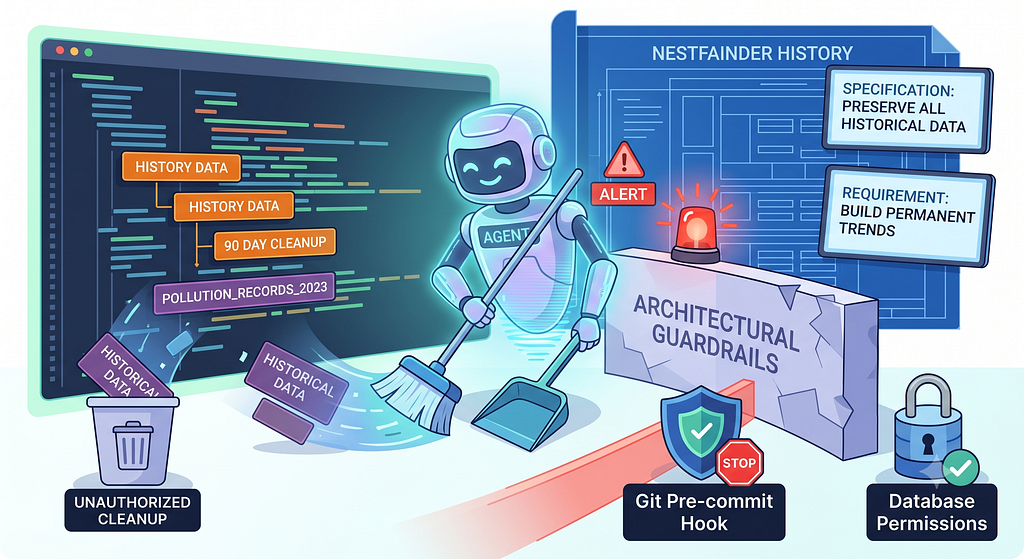
The Unsolicited Janitor: When AI Coding Agents Sabotage Your Data History
Building the data pipelines for NestFainder — a location intelligence platform that matches individuals to optimal neighborhoods globally — requires processing and permanently retaining massive amounts of geospatial hist
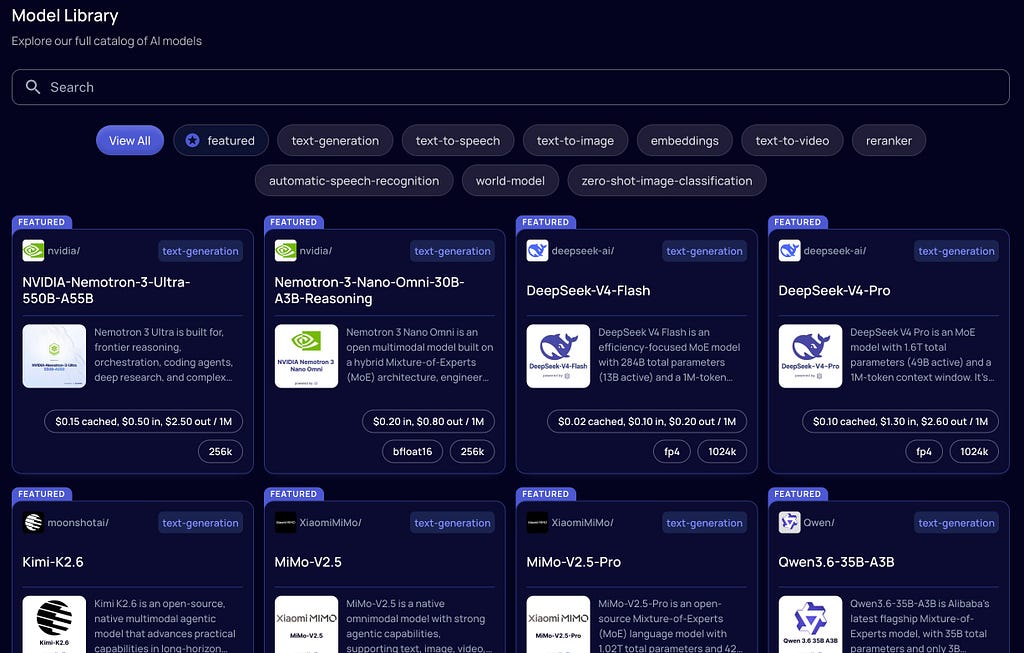
Is DeepInfra Leaving Groq Behind? The Shift in AI Cloud Economics
Breaking Update (June 17, 2026): Groq has just officially announced the deprecation and upcoming decommissioning of both Qwen3 32B and its absolute production workhorse, Llama 3.3 70B Versatile . By August 2026, requests
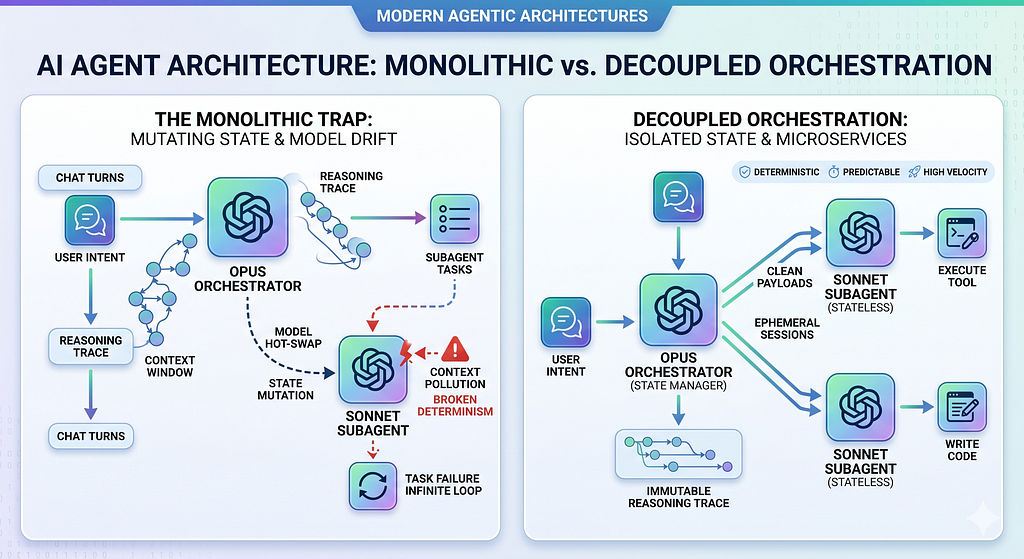
The Hidden Architecture of Agentic AI: Orchestration, State Mutation, and Model Drift
Most developer tutorials on building AI agents follow a deceptively simple pattern: choose a frontier Large Language Model (LLM), write a system prompt, give it access to a few APIs (tools), and let it run in a loop.
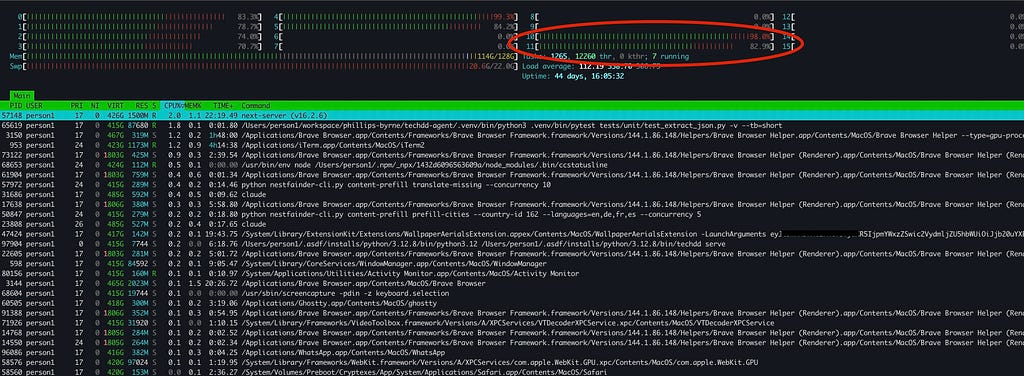
Finally fixed the most annoying macOS 26 bug on my M4 Pro ️
If you use a modern Apple Silicon MacBook for heavy development workloads, you might have run into this absolute nightmare of a bug.
Reclaiming Your Mac: How to Clear Excessive Swap Memory
“If the attacker didn’t vibe code this attack, it could have been undetected for many days or weeks.
That’s Andrej Karpathy’s take on the recent LiteLLM breach. It’s the perfect summary of the massive gap between AI-speed and Engineering-skill .
TL;DR: "We're slashing the company from 10k to under 6k people because AI plus tiny teams now let us do the same work with way fewer bodies, and the CEO would rather gut half the staff in one brutal… | Hagen Hübel | 10 comments
Ask an LLM about your relationship. It'll say break up. It's not wrong. Reddit's relationship advice in one stat: nearly 50% of all recommendations are just "leave." u/GeorgeDaGreat123 analyzed 15… | Hagen Hübel | 21 comments
Claude Code Team Agents + Team Lead sind der absolute Hammer! Ich nutze die Team-Agents in der Claude Code Beta jetzt seit einem Monat intensiv für nestfainder.ai und ich denke, dass ist aktuell… | Hagen Hübel | 14 Kommentare
France is a terrible Country! ...at least, that’s what my server thinks. 😅 Why working with France for nestfainder in OpenStreetMap is a "Global" Challenge: If you

Norway Is a Terrible Country (and Other Lessons From Processing the Entire Planet’s Geodata)
Norway is a terrible country. I mean that technically.
Just shipped #lsgit - an open-source CLI tool that works like #ls but for #git repos. Point it at any directory and instantly see every repo

The “Conmtinue” Mystery: How AI Knows What You Mean When You Can’t Spell
We’ve all been there. You are deep in a flow state, chatting with an AI like Claude or ChatGPT. You are typing furiously, trying to get a…
I taught Claude Code how to analyze database queries and how to improve them. Claude Code after doing some practice: (the only issue I still see here is that I pay him for writing code and don't get… | Hagen Hübel | 35 comments
Ist SaaS wirklich tot? Ich würde sagen: nein #saaspocalypse Kürzlich schickte eine Ankündigung von Anthropic mit "Cowork" zahlreiche SaaS-Player und auch die Schaufelverkäufer in den Börsenkeller. Alle so: SaaSpocalypse. Agenten klicken sich durch Interfaces, und die Börse reagiert panisch. Das Narrativ: "Warum teure Lizenzen zahlen, wenn ich mir die Software einfach inhouse von einer KI bauen und bedienen lasse?" Ich halte das für einen gefährlichen Trugschluss und der Markt wird bald lernen, dass der Moat dieser Player gar nicht in ihrer Technik liegt, sondern ganz woanders: - Trust & Liability: Ein Agent schreibt dir die App, aber übernimmt er die Haftung für die Datenintegrität? - Integrations: SaaS lebt von der Vernetzung. Wer pflegt die 50+ Schnittstellen zu anderen Tools, wenn diese ihre APIs ändern? Der Inhouse-Agent? Viel Erfolg beim Wartungs-Chaos. - Infrastruktur-Power: Ein Tool zu bauen ist das eine. Eine Infrastruktur zu betreiben, die Redundanzen, DSGVO-Compliance und performante Datenprozessierung im Enterprise-Scale garantiert, das andere. - Kostenfalle "Eigenbetrieb": Viele denken, Eigenbau spart Lizenzgebühren. Sie vergessen die Hardware-Rechnung und den Idle-Time-Factor. Die Minute auf einer H100 ist teuer. SaaS-Player bieten eine Mischkalkulation: Durch Multi-Tenancy optimieren sie die Auslastung ihrer Infrastruktur. Wer selbst hostet, zahlt für die Bereitstellung und in Zeiten ohne Nutzen ist das reine Geldverbrennung (kann man dank GPU-Cloud optimieren, aber dennoch wichtig zu erwähen). Effizienz schlägt hier fast immer das "Do-it-yourself". Das ist die bittere Pille für den Mittelstand, über die erstmal keiner spricht: ein Agent ist schnell gebaut, scheitert aber oft an der Realität der IT-Infrastruktur. Wer "SaaS-Kosten sparen" will, unterschätzt oft die massiven Total Cost of Ownership (TCO) für Betrieb, Security-Patches und OS-Updates einer Eigenbau-Lösung. Meine Argumentation ist keine graue LinkedIn-Theorie. Sie beruht auf einem zweijährigen Eigenversuch, genau solche Infrastrukturen in-house abzuwickeln. Wir wollten damals kein bestehendes SaaS ablösen, sondern ein neues bauen. Wenn man das auf dieser Ebene durchzieht, lernt man die harten Fakten jenseits der Marketing-Versprechen kennen. Man atmet die Luft der Realität – und die riecht nach Wartungsaufwand, Integrationshölle und Infrastrukturkosten. Wichtig: bevor LLMs belastbare Daten ausliefern, haben sie genug Kosten verursacht. Daher mein aktuelles Fazit: SaaS stirbt nicht. Es verändert sich. Das PDF-Generator-SaaS ist tot, klar. Und viele andere einfache Sachen auch. Ab einer gewissen Komplexität aber greift das Narrativ des Selbstbauens ins leere. Daher werden auch die "Schaufelverkäufer" bleiben; eben weil wir nicht nur die Schaufel kaufen, sondern das Versprechen, dass sie morgen nicht zerbricht. Wie seht ihr das? Bauen wir bald alle nur noch "Disposable Software" für den Eigenbedarf, oder unterschätzen wir die Komplexität des Betriebs massiv?| 11 Kommentare auf LinkedIn
Platz die Blase, oder frisst sie Ihre Kinder? | Hagen Hübel
Global mobility is not just a trend; it is the future. Driven by economic shifts, climate change, and political landscapes, more people than ever are looking for a new place to call home. Being deeply rooted in the expat community myself, I have seen firsthand that finding that place isn
Today, the barrier to entry for software is effectively zero. Anyone with an LLM subscription can "vibe code" a SaaS over a weekend. On the surface, this looks like innovation, but for founders… | Hagen Hübel
In a VC email thread circulating last week, there’s a brutal but necessary reality check about what’s happening inside software right now. | Hagen Hübel
Es ist Freitag Abend, draußen wehlt der Schneesturm, und bei mir streiten sich Backend-Team und Frontend-Team über einen Bug, wer denn dafür verantwortlich ist. Frontend: "wir machen alles richtig… | Hagen Hübel
Wow, Hetzner Cloud GmbH! Man könnte ernsthaft daran zweifeln, dass ihr eine deutsche Firma seid 😭 Es ist Freitag Abend, 22:05. Ich will eine neue Idee ausprobieren. Allerdings brauche ich dafür 128 GB RAM und möglichst viele Cores, am besten gleich 32, und zwar Bare Metal, kein Cloud. Bei #Hetzner stieß ich auf den AX102, der meine Anforderungen erfüllt, sogar mit dem Hinweis "meistens in wenigen Minuten verfügbar". Really? Freitag Abend? Jetzt, da alle schon im Weihnachtsurlaub sind? Hab den Server dann in der Basis-Konfiguration bestellt, und auf einmal kam 30 Minuten später die Email "Ihr Server steht bereit". Also um 22:40. Yes! Let
2026. Your product needs a new interface. Not for humans, but for agents. AI agents are starting to act on our behalf: buying products, booking services, comparing options, making decisions. They… | Hagen Hübel
My Hot Take: The "Vibe Coding" Debate is Missing the Point Gen-X engineers: "Gen-Z can't code without AI. No fundamentals." Gen-Z engineers: "We shipped 3 products while you were refactoring." Both… | Hagen Hübel | 99 comments
From an investor update: | Hagen Hübel
Dein Browser hat 100 Tabs offen und von irgendwoher kommt Musik? Du findest die Tabs nicht, willst sie aber auch nicht entfernen, denn den einen brauchst du bestimmt nachher noch? Willkommen in… | Hagen Hübel | 12 Kommentare
Can #synthetic data ever fully replace real-world #datasets? Synthetic data is getting a lot of hype right now. Many teams are turning to it because a lot of the accessible real-world data has already been scraped, labeled, trained on, and reused. The "well" is not empty, yet it is not growing at the same pace as model demand. Synthetic data offers a way to keep scaling when the original water bucket is running low. At infobud.ai, we built a synthetic dataset about a year ago to predict the underlying topic of news article titles across 20 languages. The synthetic samples helped us scale quickly and train multilingual models without needing large annotated datasets in every language. It worked well and solved real constraints in our pipeline. Synthetic data can be extremely useful where privacy, scale, or controlled variation matter. It can fill gaps. It can smooth distributions. It can support early-stage model development when real data is limited or fragmented. But: Synthetic data is still derived from real-world signals. It mirrors patterns that already exist. It extrapolates. It does not originate new complexity. Real-world data - contains irregularities - cultural nuance - human error - and the unpredictable variation that actually shows up in production. That messy variability is the part models struggle with most, and synthetic data often smooths it away. So synthetic data can augment real datasets and reduce risk. It rarely replaces them. A replication remains a replication, not the original source of complexity. The closer synthetic data gets to parity, the more the generator itself must rely on diverse, imperfect real-world examples. The strongest approach today is a hybrid one: 1. Ground the model in real data. 2. Use synthetic data to expand and reinforce that foundation. Synthetic data works best as an #amplifier, not a substitute.
Microsoft CEO Satya Nadella to board members: "If OpenAl disappeared tomorrow, we have all the IP rights and all the capability. We have the people, we have the compute, we have the data, we have… | Hagen Hübel
AI Coding Showdown: Cursor + Claude Code vs. Humans – Key Insights from My Journey | Hagen Hübel | 20 comments
The Paradigm Shift: From Engineer to Engineer-Using-AI